Imagine a world where the journey from London to Edinburgh is quicker than your morning commute. This visionary idea is becoming real thanks to htt hyperloop transportation technologies. It uses vacuum-sealed tubes to remove air resistance and friction. This lets pods travel at incredible speeds.
We are on the edge of a new era for UK infrastructure. These advancements will make our vast distances seem smaller. It’s an exciting time to see how htt hyperloop transportation technologies will change our daily lives and travel habits.
Whether you’re a regular commuter or a frequent traveller, the idea of seamless journeys is inspiring. Let’s explore the mechanics and benefits of this amazing innovation together.
Key Takeaways
- Vacuum-sealed tubes significantly reduce travel times by eliminating air resistance.
- The system offers a sustainable alternative to traditional rail and air travel.
- Infrastructure projects in the United Kingdom could benefit from increased connectivity.
- Energy efficiency remains a core focus for modern transit development.
- Future travel will prioritise speed, comfort, and environmental responsibility.
What is Hyperloop Transportation?
Next-generation travel is a leap in human ingenuity. Engineers are creating systems that could change our lives. htt hyperloop transportation technologies aim for a faster, more connected future.
Definition of Hyperloop Technology
This system uses pods in low-pressure tubes to cut air resistance. Pods can reach high speeds with little energy. It’s different from traditional rail, which fights air drag.
“The future of transport is not just about speed, but about the seamless integration of physics and infrastructure to move humanity forward.”
The pods float on magnetic levitation, reducing friction. This makes the journey smooth and quiet. htt hyperloop transportation technologies focus on efficiency and sustainability.
Brief History of Hyperloop Development
Vacuum travel ideas have been around for over a century. Inventors wanted to beat friction and air resistance. These ideas paved the way for today’s advanced systems.
In recent years, interest in vacuum travel has surged. Modern engineering has made these ideas possible. Now, htt hyperloop transportation technologies are becoming a reality.
How htt Hyperloop Works
Modern transport is changing with htt hyperloop transportation technologies. This system uses a low-pressure environment to cut down air resistance. This lets vehicles go fast with little energy needed.
By reducing air and ground friction, travel becomes more efficient. It’s a big step forward for moving people and goods over long distances.
Check Transport benevolent funds here
Key Components of the Hyperloop System
The system’s design focuses on three main parts for safety and performance. These parts are made to handle the vacuum environment while keeping passengers comfortable.
- The Pod: A pressurised vehicle for carrying passengers or cargo at high speeds.
- The Tube: A sealed, low-pressure area that protects the pod from weather and air drag.
- Terminal Stations: Hubs for managing boarding and ensuring smooth transitions for travellers.
Propulsion and Levitation Technologies
The secret of htt hyperloop transportation technologies is magnetic levitation. Magnets lift the pod off the track, removing friction.
Linear induction motors add the thrust needed for speed. These motors are highly efficient, allowing for quick starts and stops without wheels or engines.
The system’s controlled, low-pressure tube keeps it stable at high speeds. This mix of magnetic forces and motor tech makes the ride smooth, quiet, and fast for everyone.
The Benefits of Hyperloop Transportation
Imagine a world where travel between major cities takes mere minutes. This vision is becoming a reality with hyperloop transportation. It’s a system designed to change our daily commutes forever.
Speed and Efficiency Advantages
The main appeal of this technology is its incredible speed. It uses low-pressure tubes and magnetic levitation. This allows pods to reach speeds exceeding 600 miles per hour.
This huge leap in performance means long journeys can be done much faster. Journeys that take hours by train or car could now take just a fraction of the time. This unmatched efficiency connects regional hubs better, making cities closer together.
Environmental Impact Considerations
The system also focuses on long-term sustainability. Unlike traditional transport, it uses renewable energy sources. This makes it a greener option.
By being a fast alternative to short-haul flights, it cuts down on carbon emissions. It’s a vital step forward in making transport greener and more sustainable.
The Challenges Facing Hyperloop Adoption
Before we can travel at near-sonic speeds, we must tackle serious challenges. The idea of hyperloop transportation is groundbreaking. Yet, turning it into a public network is a complex task.
Regulatory Hurdles
Creating a unified legal framework is a major obstacle. There are no global standards for safety yet. This makes cross-border travel hard to plan.
Governments need to agree on consistent rules for safety and emergencies. Without these agreements, the system’s rollout will be slow and fragmented.
Technological Limitations
The engineering needs for hyperloop transportation are huge. Keeping a vacuum inside a long tube is a massive challenge.
Any leak or structural failure could ruin the system. Also, the land and precise alignment needed for comfort at high speeds are significant.
| Challenge Category | Primary Obstacle | Impact Level |
|---|---|---|
| Regulatory | Lack of international safety standards | High |
| Technical | Vacuum maintenance over long distances | Critical |
| Infrastructure | Massive land and construction requirements | Moderate |
Overcoming these barriers is key for hyperloop transportation‘s future. By tackling these technical and regulatory gaps, we can get closer to a safe and reliable system.
Major Players in the Hyperloop Industry
The race to change travel is getting intense. Several key organisations are leading the way in hyperloop transportation. They are moving from ideas to building real prototypes that could change how we travel.
An Overview of Leading Companies
Several pioneers are shaping this new sector. Companies like Hyperloop Transportation Technologies (HyperloopTT) are working on systems for passengers. They use advanced magnetic levitation for sustainability.
Hardt Hyperloop is also making big moves in Europe. They use lane-switching technology. These companies are not just building tubes; they are engineering the future of mobility.
“The greatest danger in times of turbulence is not the turbulence; it is to act with yesterday’s logic.”
Partnerships and Collaborations
Success in this field depends on partnerships. Companies team up with governments and investors. This gets them the funding and support they need for big tests.
Collaboration is key in this industry. Important efforts include:
- Joint research with top universities to improve vacuum technology.
- Partnerships to add hyperloop transportation to city plans.
- Agreements to build fast travel paths across borders.
Together, they focus on safety and efficiency. By sharing knowledge and resources, these big players are making science fiction a tangible reality.
Current Hyperloop Projects in the UK
The United Kingdom is looking into new transportation technologies for its infrastructure. They want to cut travel times between big cities. This could change how we move around the country.
Proposed Routes and Locations
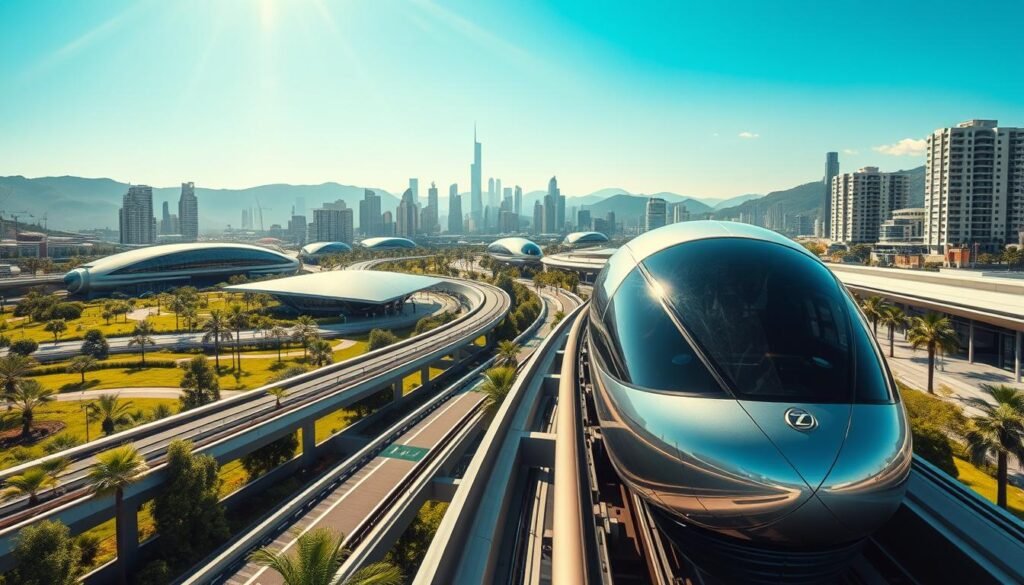
Discussions often start with the North-South corridor. They aim to link London to cities like Manchester, Leeds, or Edinburgh. This is to boost connectivity between regions.
These plans could ease the load on motorways and the West Coast Main Line. A seamless link between these areas could help the economy grow across the UK.
Status Updates on Development
Right now, the UK is in the early stages of adopting these transportation technologies. Private companies and universities are studying if the UK’s geography is right for it.
Government plans are being looked at for safety and cost. No work has started yet, but the research is important. People think these innovative systems will be big in the future of travel in Britain.
Investment and Economic Impact
New transportation technologies are catching the eye of global investors. These systems are moving from ideas to real-life projects. This change is a big step towards better national connections and growth.
Funding Sources and Investment Trends
Getting money for these big projects comes from many places. Governments give grants for research and development. Private firms see the chance for big profits as these transportation technologies grow.
Now, we’re seeing more partnerships between public and private sectors. This way, costs are shared, and projects meet national goals. Investors look for companies that can make it work and follow the rules.
Potential Job Creation
Advanced transit systems will create lots of jobs. We’ll need skilled people in engineering, software, and manufacturing. These jobs are key for building the needed infrastructure for transportation technologies.
Once built, construction will boom. Local areas will get jobs in maintenance and operation. This will help the economy and offer stable jobs for many.
| Economic Sector | Primary Role | Impact Level |
|---|---|---|
| Engineering | System Design | High |
| Manufacturing | Component Production | High |
| Construction | Infrastructure Build | Very High |
| Logistics | Supply Chain Management | Medium |
The Future of Hyperloop Transportation
Imagine a world where your morning commute across the country takes mere minutes. This vision is becoming a reality, promising to change how we see distance and time. As these systems grow, they will be key to our global travel.
Predictions for Passenger Use
In the next few decades, hyperloop travel will serve both busy professionals and leisure seekers. Daily commuters will be able to work in one city and live in another hundreds of miles away. This will be entirely feasible.
Long-distance travel will also change. Instead of hours at airports, passengers will enjoy quick, comfortable journeys through tubes. These transportation technologies promise:
- Unmatched speed that rivals short-haul aviation.
- Consistent departure schedules to eliminate long wait times.
- A smooth, quiet cabin experience for maximum productivity or rest.
Integration with Existing Transport Systems
The hyperloop’s true strength is its role in a wider network. It won’t replace current infrastructure but will be a high-speed backbone for rail and bus services.
Imagine arriving at a central hub where your hyperloop pod connects to local lines or bus routes. This seamless transition is key for a truly efficient travel experience for all.
By connecting major cities with smaller hubs, we can spread the benefits of high-speed travel. This approach will reduce motorway congestion and lower carbon emissions. The future of travel is about connectivity and convenience, not just speed.
Public Perception of Hyperloop Technology
The public’s view is key to hyperloop technology’s success. The idea of fast travel excites many, but practical concerns hold others back.
Surveys and Opinion Research
Recent studies show a split opinion on this new tech. Some people are really excited about fast travel between cities. They see it as a big step forward.
But, these surveys also show worries about using it. Key points include:
- Many are eager for quicker commutes.
- There’s fear about the feeling of being in a vacuum tube.
- There’s doubt about the hyperloop system’s reliability.
Addressing Public Concerns
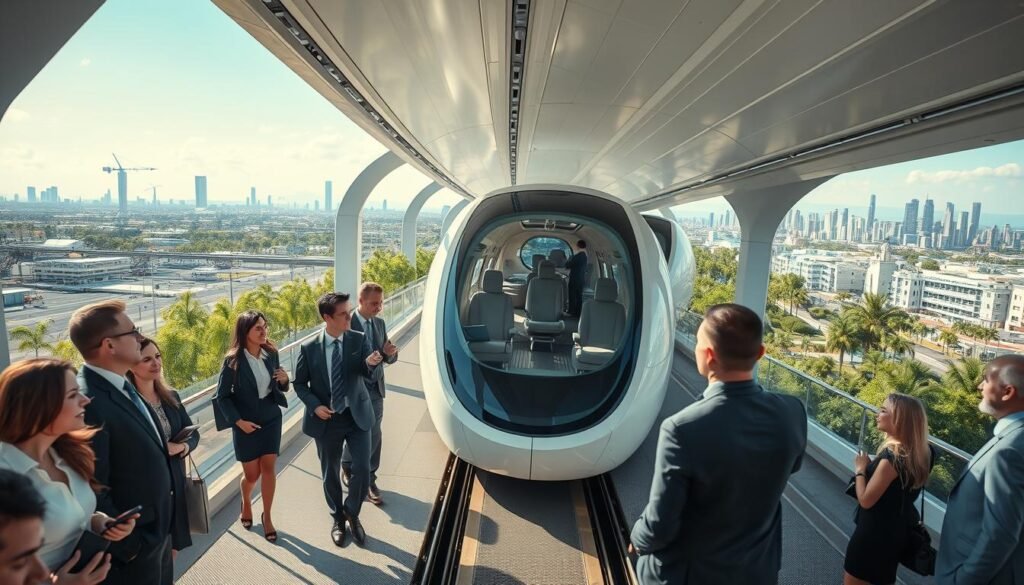
To make the hyperloop real, we must overcome psychological hurdles. People worry about feeling trapped and how to get out quickly in an emergency.
Being open is the best way to win trust. Companies are working hard to address these worries:
- Safety Protocols: They’re making sure systems are safe and reliable.
- Design Comfort: They’re making spaces feel roomy and welcoming.
- Emergency Planning: They’re creating clear, tested plans for emergencies.
By focusing on these human needs, the hyperloop can gain the trust it needs. Talking openly about how it works is key to winning over the public.
Comparison with Other Transport Modes
Looking at the future of travel, it’s key to compare the hyperloop with high-speed rail. Instead of seeing them as rivals, many believe they’re complementary for different needs.
Hyperloop vs. High-Speed Rail
High-speed rail has been a big help in the UK for years, connecting major cities well. But, traditional trains hit limits due to friction and air resistance at high speeds.
The hyperloop runs in a low-pressure tube, cutting down on drag. This lets it go much faster while keeping the ride smooth. It’s meant to fill the gap between long-distance rail and short flights.
Cost and Time Efficiency Comparisons
Efficiency isn’t just about speed; it’s also about energy use and infrastructure costs. The hyperloop needs a sealed tube, which makes the start-up costs high.
But, it might save on long-term costs because it uses less energy. Energy efficiency is a big reason why developers want to make it a green transport option.
| Feature | High-Speed Rail | Hyperloop |
|---|---|---|
| Top Speed | 200-300 km/h | 600-1000+ km/h |
| Energy Usage | Moderate | Very Low |
| Infrastructure Cost | High | Very High |
| Primary Use | Regional/National | Inter-city/Long-haul |
The hyperloop brings a special value that fits well with what we already have. By combining these, we can make travel better and more efficient for all.
Innovations in Hyperloop Technology
Recent breakthroughs are turning the dream of a vacuum transport system into reality. Engineers are tackling tough physics problems that were once thought impossible. These steps are key to making the hyperloop a safe and efficient way to travel.
Recent Developments and Breakthroughs
One big step is in vacuum pump efficiency. Keeping a tube network under low pressure needs a lot of energy. But new smart-pumping tech has cut down power use. This makes running a hyperloop network cheaper and greener.
Also, new materials for the tubes are being developed. These materials are better at handling heat and staying strong. They help the hyperloop stay stable, even in harsh weather.
Innovations on the Horizon
Future work focuses on making the hyperloop run itself and switch pods quickly. This will let many pods travel at once safely. It’s a big step towards making the hyperloop ready for real use.
Research on magnetic levitation is also making progress. New designs are making pods lighter and lifting them better. As these improvements keep coming, the hyperloop will likely be the top choice for fast travel in the UK and worldwide.
| Feature | Traditional Rail | Hyperloop System |
|---|---|---|
| Energy Source | Overhead Lines | Renewable/Battery |
| Friction Levels | High (Wheel-on-Rail) | Near-Zero (Levitation) |
| Infrastructure | Standard Steel | Advanced Composites |
| Operational Speed | Moderate | Ultra-High |
Conclusion: The Path Forward for Hyperloop
The world is moving towards a new way of travel. We’re at a time when big ideas and engineering come together. This is changing how we connect our cities.
Realising the Modern Systems
Hyperloop is changing how we see long-distance travel. It uses vacuum environments and magnetic propulsion. This shows us a future of faster, cleaner travel.
This technology could make our daily commutes quicker. It also aims to reduce the carbon footprint of our travels.
A Call to Action for Industry Leaders
To make this vision real, we need everyone’s help. Governments, investors, and engineers must work together. We need ongoing funding to go from prototypes to real networks.
Clear rules are also key. They give companies the confidence to keep innovating.
We encourage you to keep up with this exciting field. Your support is important. Together, we can make these new technologies a part of our world’s transport.