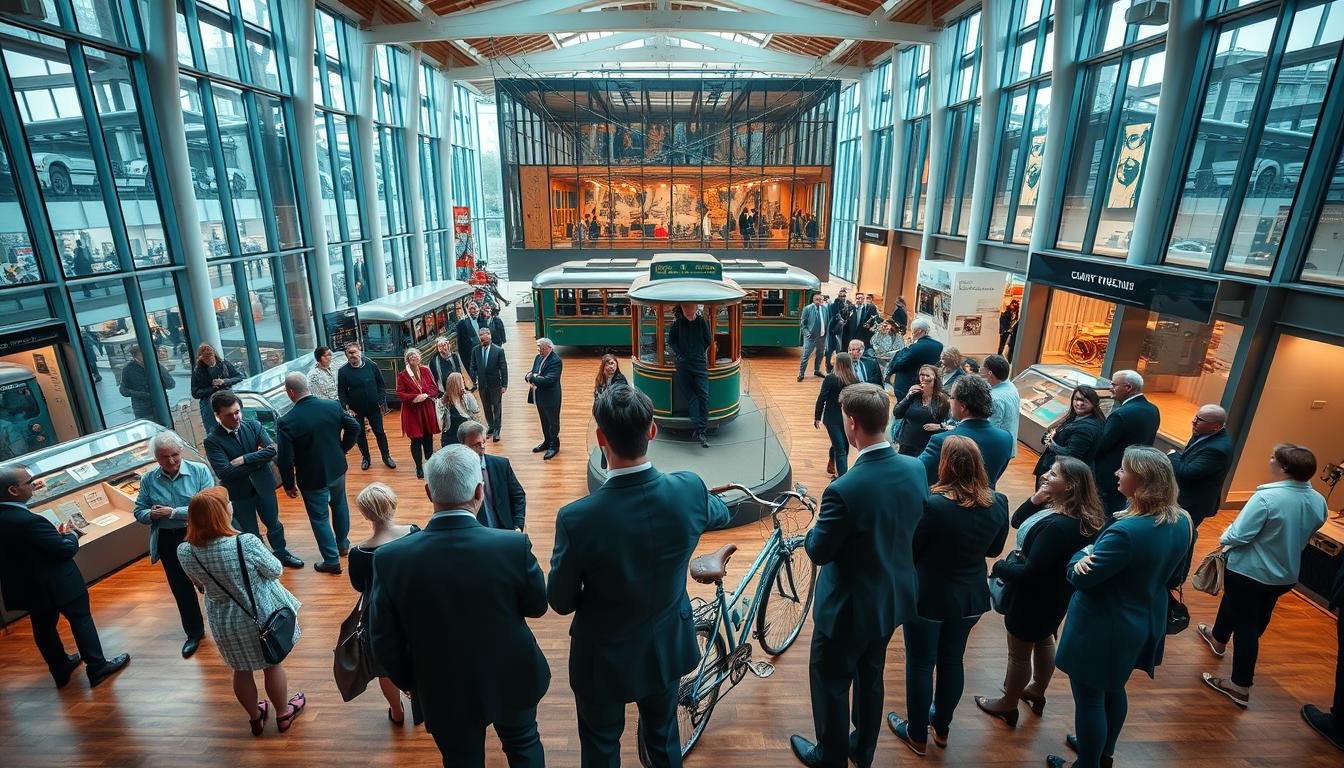
If you’re planning a trip to Scotland, don’t miss the glasgow transport museum. It’s a must-see for anyone interested in how travel has changed over time.
Located by the River Clyde, this museum honours the area’s industrial past. It’s a key part of Glasgow’s culture, perfect for families and history buffs.
At the glasgow transport museum, you can see vintage cars, locomotives, and trams. These vehicles have greatly influenced our lives. Whether you live here or are visiting, this museum offers a special look at engineering wonders that linked our communities.
Key Takeaways
- Discover the rich industrial heritage of Scotland through interactive exhibits.
- Explore a vast collection of historic vehicles, including trams and locomotives.
- Enjoy a family-friendly environment that caters to all age groups.
- Learn how travel innovations have shaped the development of the city.
- Plan your visit to this iconic riverside landmark for an educational experience.
Welcome to the Riverside Museum
Walking into the Riverside Museum is like stepping into Scotland’s industrial past. It’s a place where history comes alive, filled with transport history. It’s a warm and inviting atmosphere that families and history buffs love.
The Legacy of the Museum of Transport
The old Museum of Transport was dear to many. It showcased Scotland’s engineering marvels, from old trams to famous trains. The move to a state-of-the-art facility ensured these treasures were celebrated in a fitting way.
This new home gives the collection the space it deserves. It shows Glasgow’s dedication to its past and future. Each exhibit tells a tale of innovation, highlighting the engineering prowess of the region.
Why the Riverside Museum is a Must-Visit
Visiting the glasgow transport museum is a must when in the UK. It’s more than just vehicles; it’s an interactive journey through history. It’s designed for all ages to enjoy.
The museum’s welcoming staff and easy layout make it perfect for all. Whether you love old cars or are curious about travel history, you’ll find something interesting. It’s a world-class attraction that encourages discovery and learning.
The glasgow transport museum celebrates human creativity. It invites you to explore how travel has evolved and the machines that changed our world. We suggest spending a day here to uncover the stories within its walls.
Architectural Marvels of the Glasgow Transport Museum
As you approach the River Clyde, the first thing you see is the museum’s dramatic roof. The glasgow transport museum is more than a place for vehicles. It’s a work of art that shapes the city’s skyline.
Zaha Hadid’s Visionary Design
Zaha Hadid designed a building that looks like a wave. Its shape lets it open up at both ends. This creates a tunnel-like path that links the city to the river.
The design is all about transparency and movement. It mirrors the exhibits inside. Key features include:
- A distinctive zinc-clad roof with peaks and troughs.
- An open interior space for flexibility.
- Large glass walls for natural light.
“The design continues the fluid connection between the city and the river, creating a dynamic space that invites visitors to explore the history of travel.”
Sustainability and Modern Infrastructure
The museum is a model for sustainable transportation and care for the environment. It uses advanced systems to keep exhibits safe and save energy.
It promotes green travel by encouraging public transport. This makes the museum a leader in eco-friendly practices.
Natural ventilation and insulation keep the museum’s carbon footprint low. It shows how modern buildings can be green and offer great experiences.
Iconic Road Vehicles and Vintage Cars
The museum takes us on a journey from steam power to sleek post-war classics. It shows how road travel changed our lives. Visitors can see the skill needed to keep these vehicles in top shape.
The Golden Age of Motoring
The early 20th century was a time of big change for British drivers. Better roads made driving more accessible. This era, known as the Golden Age of Motoring, saw style and engineering come together in iconic designs.
Driving moved from a luxury for the rich to a need for many. The museum shows the shift to early automotive luxury and practicality.
Rare Models and Their Historical Significance
Keeping these rare models in good shape is a big challenge. Each vehicle is a window into its time. The museum makes sure we can learn from the ingenuity of early engineers.
The collection has unique pieces rarely seen. These vehicles are more than metal and rubber; they’re part of our heritage.
- Authentic Restoration: Experts use old methods to keep parts original.
- Historical Context: Each display tells us about the vehicle’s impact on British culture.
- Public Access: Rare models are shown for a while to preserve them.
The 1900s Steam-Powered Car Collection
Before petrol cars, steam power was a contender for transport. These early tries were complex marvels. They needed a skilled person to manage the steam and water while driving.
The museum has several steam-powered cars. They show a “what if” moment in car history.
Post-War British Automotive Icons
After World War II, British car design saw a creative rebirth. Designers aimed for cars that were affordable and stylish for families. These cars symbolised the post-war economic recovery and the growing middle class.
| Vehicle Era | Primary Power Source | Design Focus |
|---|---|---|
| Early 1900s | Steam | Experimental |
| 1920s-1930s | Petrol | Luxury and Status |
| 1950s-1960s | Petrol | Efficiency and Style |
These post-war icons are loved by car fans everywhere. They remind us of a time when British engineering was at the forefront in both looks and performance.
The Evolution of Public Transport in Glasgow
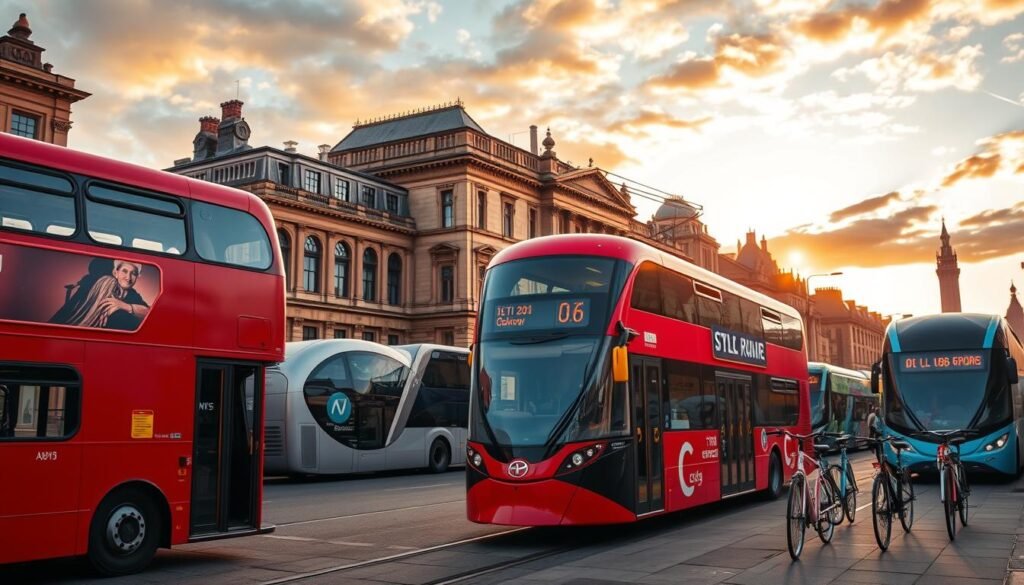
Public transport in Glasgow has seen a remarkable transformation over the last century. The city’s transit network has grown and changed a lot. It shows how people have moved around Glasgow over the years.
The Story of the Glasgow Subway
The Glasgow Subway opened in 1896. It’s one of the oldest underground systems in the world. Known as the “Clockwork Orange,” it has been a key part of Glasgow’s transport for generations.
This engineering marvel shows that efficient transit can work well in a busy city.
Trams and Trolleybuses Through the Decades
Glasgow was once known for its wide tram network. These trams were a big part of daily life, linking different areas of the city. As Glasgow grew, the need for good transportation planning became clear.
Restoring the Glasgow Corporation Tram
Volunteers and historians are working hard to save these old trams. Restoring a Glasgow Corporation Tram is a big job that needs a lot of skill. Their work lets future generations see the craftsmanship of the past.
The Impact of Urban Transportation Planning
Good urban transportation planning has shaped Glasgow. It has helped keep the city’s history while also meeting the needs of its growing population. This ongoing effort is key to Glasgow’s future.
| Transit Mode | Primary Era | Key Benefit |
|---|---|---|
| Glasgow Subway | 1896–Present | Rapid cross-city travel |
| Electric Trams | 1898–1962 | High-capacity street transit |
| Trolleybuses | 1949–1967 | Flexible, quiet operation |
Maritime Heritage and Shipbuilding Legacy
Glasgow’s identity is forever tied to the rhythmic clanging of hammers against steel in its historic shipyards. The River Clyde acted as the city’s industrial heart, fostering a global reputation for engineering excellence. This maritime history remains a vital part of the local transportation infrastructure that shaped the modern world.
Glasgow’s Role in Global Shipbuilding
For over a century, the shipyards of the Clyde were the envy of the world. Thousands of vessels, from grand ocean liners to sturdy merchant ships, were launched into these waters. This era of prosperity turned Glasgow into a thriving hub of international commerce and innovation.
The sheer scale of production required advanced logistics and robust support systems. By mastering complex maritime transportation infrastructure, the city ensured that its ships could reach every corner of the globe. This legacy of craftsmanship continues to inspire engineers and historians alike.
The Tall Ship Glenlee
Moored proudly outside the museum, The Tall Ship Glenlee stands as a magnificent survivor of this golden age. Built in 1896, this steel-hulled sailing vessel has travelled the world multiple times. It serves as a tangible link to our seafaring past, giving visitors a chance to step back in time.
Check British Transport Police jobs here
Life Aboard a 19th-Century Merchant Vessel
Life for a sailor on the Glenlee was defined by hard work and unpredictable conditions. Crew members faced long months at sea, battling harsh weather and limited supplies. It was a demanding existence that required immense resilience and teamwork.
Daily routines involved constant maintenance of the rigging and sails to keep the ship moving. Despite the hardships, these voyages were essential for global trade. They connected distant markets and allowed for the exchange of goods that defined the 19th-century economy.
Preserving Maritime Infrastructure
Maintaining such a historic vessel requires dedicated effort and specialised skills. Experts work tirelessly to protect the ship from the elements, ensuring its structural integrity for future generations. This commitment to preserving maritime transportation infrastructure is vital for keeping our history alive.
Public access to the Glenlee allows everyone to appreciate the scale of these engineering feats. Through ongoing conservation, the museum ensures that the stories of the Clyde remain accessible to all. Protecting these assets is a testament to Glasgow’s enduring respect for its maritime roots.
Interactive Displays and Family Engagement
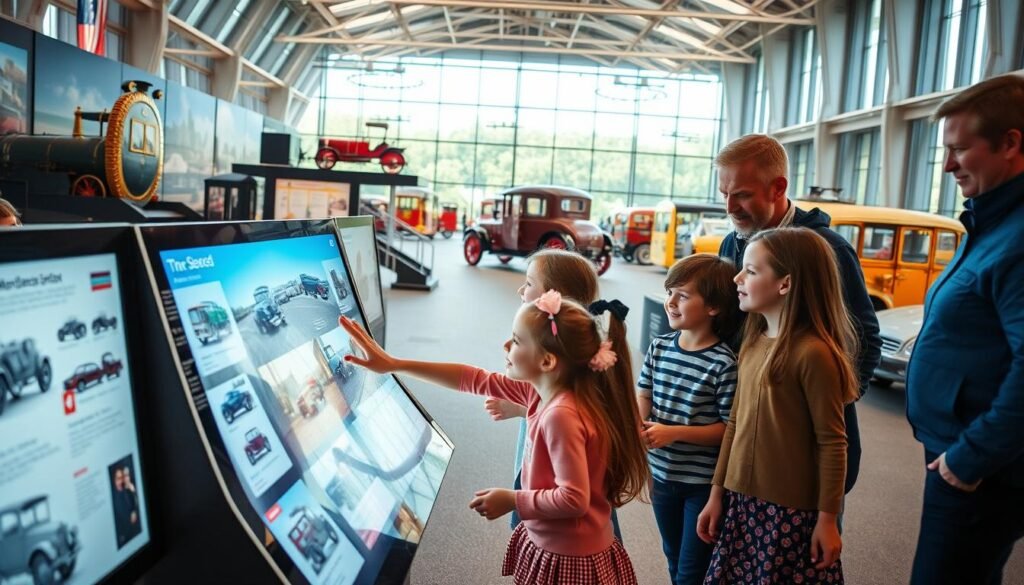
Walking into the museum is like stepping into a world of human creativity. It’s all about active participation, where visitors get to experience history up close. The mix of old artefacts and new tech makes it a lively place where curiosity thrives.
Immersive Street Scenes
The museum’s street scenes are a big hit. They take families back to the early 20th century. You can walk through cobbled lanes with old shopfronts.
Visitors can see a vintage garage or a traditional chemist shop. It’s a hands-on way to learn about the past. It makes the museum visit a memorable journey through time.
“Museums are the best classrooms for the next generation, as they turn abstract facts into tangible, exciting discoveries that spark a lifelong love for learning.”
Hands-on Learning for Future Engineers
The museum aims to inspire young innovators with its engineering zones. These areas have hands-on challenges that make kids think about machines. They learn by playing with models and testing physical principles.
These consoles are both fun and educational. They make complex ideas easy for everyone to understand. Kids can learn about aerodynamics or steam engines and feel a sense of achievement.
The table below shows the interactive experiences for families:
| Activity Type | Target Age Group | Educational Focus |
|---|---|---|
| Street Scene Exploration | All Ages | Social History |
| Engineering Consoles | 7-14 Years | Mechanical Physics |
| Vehicle Simulation | 5-12 Years | Transport Operation |
The museum offers engaging opportunities for kids. It helps them appreciate the science behind vehicles. This interactive learning makes the museum a key part of local education. Every interaction brings kids closer to becoming engineers.
Connecting History to Modern Transportation Studies
The Riverside Museum is more than a showcase of old cars. It’s a living laboratory for today’s researchers. By looking at how transport has changed, we learn about today’s transit problems. This link between past and present is key for those who want to shape our future transport.
Lessons for Sustainable Transportation
Old exhibits show us how early choices affect our planet today. By studying the ups and downs of transport, experts find ways to make travel greener. These lessons help avoid old mistakes and push for eco-friendly city growth.
“The best way to predict the future is to study the past, when it comes to the infrastructure that shapes our daily lives.”
Today’s green transport plans learn from history. The museum shows the shift from dirty engines to cleaner ones. It’s a powerful lesson for those working towards a greener future.
Insights for Transportation Policy and Management
The museum is a treasure trove for transportation studies. It gives insights for transportation research. Many university transportation centers use it to see how public transport has changed over a century. This keeps history at the core of today’s transportation policy.
Good transportation management needs to understand people and machines. By looking at Glasgow’s past transit successes, today’s planners can improve their city plans. The museum links theory with real-world solutions in transport.
Planning Your Visit to the Museum
We want your visit to the Riverside Museum to be smooth and fun. Preparing a bit beforehand lets you enjoy the fascinating exhibits and history inside without worry.
Opening Times and Accessibility
The museum welcomes visitors every day. It opens from 10:00 am to 5:00 pm. Always check the official website for any changes or holidays before you go.
Accessibility is a top priority here. The museum is wheelchair friendly, with easy access and lifts. There are also special parking spots for blue badge holders near the entrance.
Getting to the Riverside Museum
Getting to the museum is easy, thanks to its location by the River Clyde. You can travel by public transport or car.
- Train: Partick station is close, just a short walk from the museum.
- Bus: Many buses stop near the museum, making it easy to get there from the city centre.
- Cycling: The museum is connected to the National Cycle Network. It’s a fantastic place for a bike ride.
- Car: There’s a big car park outside for those driving.
It’s a good idea to check traffic or public transport apps on the day. This helps you arrive at Glasgow’s famous landmark without stress.
Conclusion
The Riverside Museum is a symbol of Glasgow’s innovative spirit. It shows the city’s key role in global trade and mechanical progress. It links the past’s industrial achievements to the future’s green transport.
Walking through the museum, visitors learn about the machines that changed our world. Each exhibit shares a tale of human creativity and the drive for better travel. They see how local skills helped set global engineering and design standards.
Make plans to visit and see this blend of history and community for yourself. Exploring these collections gives a fresh view on our societal journey. It’s a great chance for families to discover the story of movement in this amazing city.