Ever wondered who makes sure your daily commute is smooth? The national transport commission is key to our travel networks. They work hard to organise and improve our travel ways.
This body shapes our transport policy for a safer, more reliable future. They aim to make travel efficient for all UK citizens. Their work keeps our busy infrastructure up to standard.
We want to clear up the complex rules that rule our roads and railways. Knowing about this organisation shows us the effort behind our smooth travels. Let’s see how these experts shape our daily journeys.
Key Takeaways
- The body plays a central role in shaping UK travel standards.
- It prioritises safety and efficiency for all commuters.
- Strategic planning helps modernise our national infrastructure.
- Public feedback is often used to refine future travel programmes.
- Clear regulations ensure that services remain reliable and consistent.
What is the National Transport Commission?
In the United Kingdom, a key organisation oversees our travel network. The national transport commission is the main transport authority. It guides the growth of our complex travel systems.
This body coordinates efforts across different areas. It keeps our infrastructure strong and reliable. It’s a key part in keeping travel standards high for road, rail, and public transport users.
Overview of the Commission’s Role
The commission’s main goal is to set a clear direction for national travel. It works hard to link government policies with the needs of daily travel.
Good transport regulation is key. It sets rules to avoid service gaps. This makes travel in the UK feel smooth, no matter where you are.
Check Transport credit union uk here
Key Objectives and Functions
The commission focuses on several key areas to keep the country moving. These goals aim to enhance the travel experience and ensure safety.
The main tasks of the national transport commission include:
- Safety Oversight: Setting high standards to protect passengers and staff.
- Policy Development: Creating plans for infrastructure growth and modernisation.
- Regulatory Compliance: Making sure all operators meet quality standards.
- Strategic Planning: Looking at future travel needs to avoid congestion and improve connections.
Thanks to these efforts, the transport authority keeps the UK connected. This work is essential for our daily lives. It makes travel safer and more efficient for all.
History of the National Transport Commission
To grasp the current state of our transport network, we must first look at the commission’s history. Its journey shows the changes in how we travel across the United Kingdom over the last century.
The commission has always changed to meet the British public’s needs. By looking back, we understand why it works as it does today.
Establishment and Evolution
The commission started with efforts to standardise travel across the nation. Early transportation legislation set the stage for managing roads and railways.
These laws aimed to ensure safety and efficiency during rapid industrial growth. Over time, the commission grew from an advisory role to a strong regulatory body.
Significant Changes Over the Years
As time went on, the commission had to manage more complex transport infrastructure. It balanced the needs of a growing population with the need for sustainable travel.
New transportation legislation gave the commission more power. This allowed for better planning and service integration across the country.
The table below shows major milestones in the commission’s growth:
| Era | Primary Focus | Key Outcome |
|---|---|---|
| Early 20th Century | Network Expansion | Standardised Regulations |
| Mid 20th Century | Public Safety | Centralised Oversight |
| Modern Era | Transport infrastructure | Sustainable Innovation |
Today, the commission is key to the UK’s transport landscape. It keeps improving to ensure our travel systems are ready for the future.
Key Responsibilities of the Commission
The UK transport system relies on a key body to keep everything running smoothly and safely. As a main transport authority, this commission oversees the complex network of movement between towns and cities. Its daily work is vital for keeping public trust and ensuring everything runs efficiently across the country.
Regulation of Transport Services
The commission is key in overseeing various transit networks. It ensures operators meet high service standards through strong transport regulation. This is backed by detailed transportation legislation to protect passengers’ interests.
Keeping things consistent is a top goal for the commission. It standardises procedures to avoid fragmentation and keep services reliable. This effort helps commuters have a smooth experience everywhere.
Safety Standards and Compliance
Safety is at the heart of the commission’s work. It sets clear national transport guidelines for all operators to follow. These rules are essential for keeping a licence to operate.
The commission checks for compliance through regular audits and inspections. If operators don’t meet these standards, the commission acts quickly. This dedication to safety keeps our roads and rails safe for everyone.
Economic and Environmental Considerations
Transport planning today must balance economic growth with environmental care. The commission aims to foster innovation within strict transportation legislation. It encourages the use of greener technologies to cut down on carbon emissions.
Efficient movement is key for economic growth, but it mustn’t harm our environment. By following national transport guidelines, the commission supports sustainable development. This forward-thinking strategy helps the UK stay competitive while protecting the environment for the future.
In summary, the commission is a vital transport authority that connects policy to practice. Through effective transport regulation, it shapes a safer and more sustainable future for everyone.
The Structure of the National Transport Commission
Effective transport governance needs a clear structure. It must balance strong leadership with input from many stakeholders. Looking at the national transport commission‘s structure helps us understand how decisions are made. These decisions shape our daily travel plans.
The organisational hierarchy is set up to check every policy decision. It makes sure each decision is efficient and benefits the public. This structure gives us a clear view of how the commission works to keep the country moving.
Governance and Leadership
The national transport commission has a dedicated board and leadership team. They set the strategic direction and make sure goals are met. Their work is key to the commission’s success.
The leadership structure promotes accountability and planning for the long term. It ensures transport governance is consistent everywhere. This helps keep the country’s transport system running smoothly.
Stakeholders Involved
The commission’s success relies on working with different groups. These stakeholders bring their own views to help create transport policies. Their input makes policies more inclusive and effective.
Government, private transport operators, and public interest groups all play important roles. They work together to meet the needs of travellers. They also focus on economic and environmental goals.
| Stakeholder Group | Primary Responsibility | Contribution to Governance |
|---|---|---|
| Government Bodies | Policy and Funding | Sets national standards |
| Private Operators | Service Delivery | Implements operational efficiency |
| Public Interest Groups | Advocacy | Ensures user-focused outcomes |
| Technical Experts | Research and Data | Provides evidence-based insights |
The National Transport Commission and Public Transport
The National Transport Commission is key in making public transport better. It guides the network’s strategy, making travel reliable for millions in the UK.
Impact on Buses and Trains
The commission sets clear national transport guidelines for buses and trains. This ensures consistency, whether you’re on a local bus or a long-distance train.
Standardising expectations means passengers get a seamless experience everywhere. These rules are vital for the transport network’s integrity.
Initiatives to Improve Service Quality
The commission pushes for transport industry standards that focus on commuters. It aims to improve schedules and make stations and vehicles more accessible.
Modernising the network means making it user-friendly and efficient. The table below shows how these efforts help passengers:
| Initiative Focus | Primary Goal | Passenger Benefit |
|---|---|---|
| Reliability Tracking | Reduce delays | More predictable journeys |
| Accessibility Upgrades | Inclusive travel | Easier station navigation |
| Digital Integration | Real-time updates | Better travel planning |
By using transport industry standards, public transport stays competitive and appealing. The commission’s work, based on national transport guidelines, promotes excellence for all passengers.
The Environmental Impact of Transport
Modern transport policy aims to connect us while protecting our planet. We’re working hard to reach net-zero targets. This means changing how we move people and goods.
This change is key to keeping our travel systems alive for the future.
Sustainable Practices and Policies
The commission puts environmental goals at the heart of its work. It aims to cut the sector’s carbon footprint. By following strict transport industry standards, sustainability is a top priority.
This approach helps reduce emissions and keeps our travel networks efficient.
Commitment to the planet is seen in new infrastructure plans. Each project must show it’s good for the environment. This pushes operators to use cleaner practices in their supply chains.

Innovation in Green Transport Solutions
New tech is changing how we power our vehicles. Electric cars are becoming common, thanks to more charging points. These changes are vital for meeting today’s transport policy goals.
The sector is also looking into other clean fuels for big vehicles and long-distance travel. Innovation in hydrogen and biofuels is promising. By following new transport industry standards, these green options can grow and succeed.
Collaboration with Local Authorities
For smooth travel across the UK, the national commission and local councils must work together. They need to align their plans with what local communities need. This ensures national strategies work well at the local level.
Working Relationship with Councils
The national commission and local authorities share goals and communicate well. Each transport authority is key, making sure national plans fit local needs. This helps spot and fix transport problems early.
Regular talks help keep everyone on the same page about funding and plans. Sharing data leads to smarter decisions on transport routes and upkeep. This collaborative framework avoids wasting money and ensures funds go where they’re most needed.
Joint Projects and Initiatives
Great projects happen when national and local teams work together. For example, many places have ticket systems that make travel easy. These come from planning that puts the user first.
The table below shows how tasks are split for smooth project work:
| Responsibility Area | National Commission Role | Local Council Role |
|---|---|---|
| Strategic Planning | Sets national standards | Identifies local priorities |
| Funding Allocation | Provides core investment | Manages local implementation |
| Infrastructure Design | Ensures network connectivity | Oversees site-specific works |
| Service Monitoring | Tracks national performance | Handles local feedback loops |
Through these partnerships, the UK’s transport governance keeps getting better. Every local transport authority is vital, making big plans real for daily commuters.
The Role of Technology in Transport
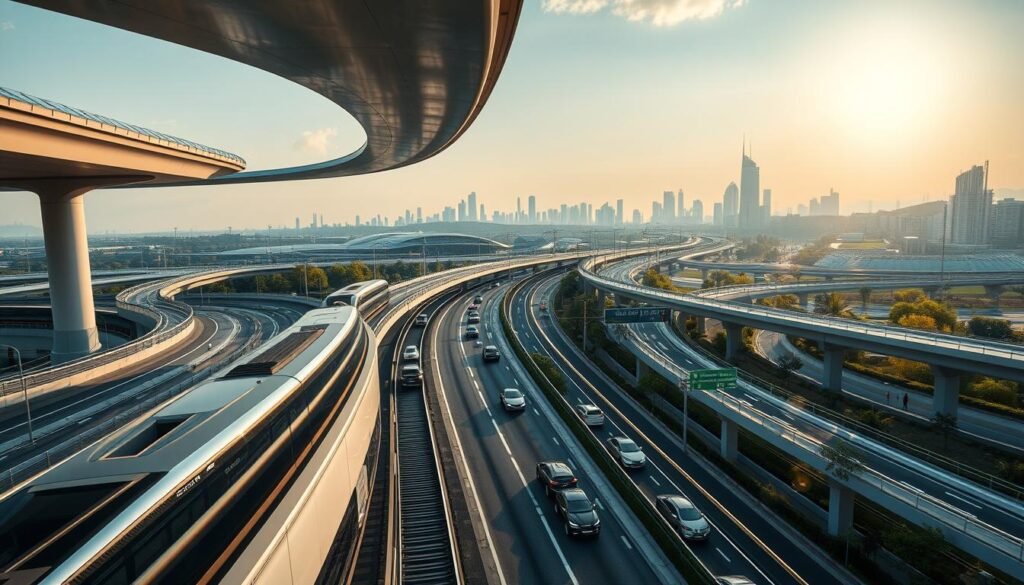
Technology is changing how we travel in the UK. Digital tools are now key to planning and enjoying our journeys. By updating our transport infrastructure, the commission makes travel reliable and easy for all.
Digital Innovations and Developments
New smart ticketing systems make paying for travel easier. They replace paper tickets with digital ones, making travel smoother. Real-time data also helps commuters stay updated on travel changes.
This information helps us plan our commutes better. The commission is making our transport infrastructure better by adding these digital tools. These changes aim to save time and reduce travel stress.
Future Systems and Smart Transport
The future brings connected networks that meet our travel needs. Smart transport uses sensors and AI to manage traffic. This helps keep our roads and rails running smoothly.
The table below shows how smart systems differ from old methods:
| Feature | Traditional System | Smart System |
|---|---|---|
| Ticketing | Paper-based | Contactless/Digital |
| Data Access | Static schedules | Real-time updates |
| Traffic Flow | Manual control | AI-optimised |
| Connectivity | Isolated services | Integrated network |
By investing in these technologies, the commission aims to create a better network. As we adopt these advancements, our goal is to offer a connected and efficient travel experience for everyone in the UK.
Future Challenges for the National Transport Commission
The national transport commission is facing a future full of rapid changes. Traditional travel methods are being replaced by digital solutions. It’s vital for the commission to stay ahead to keep the UK’s transport network reliable.
Adapting to Change and Emerging Trends
Our society is changing, and so is how we travel. The national transport commission needs to be flexible to meet these new demands. It must ensure that our transport infrastructure is strong.
The rise of shared mobility and sustainability are now real issues. The commission must plan carefully for these changes. Using data to guide its decisions will help it stay ahead.
Regulatory Challenges Ahead
Good transport regulation is key to a safe and accessible network. The commission must balance new tech with safety standards. It’s important that new systems don’t forget about vulnerable passengers.
The table below shows the main areas the commission needs to focus on:
| Challenge Area | Current Focus | Future Goal |
|---|---|---|
| Digital Integration | Basic connectivity | Seamless smart systems |
| Safety Standards | Manual oversight | Automated compliance |
| Transport Regulation | Static policy | Adaptive frameworks |
| Accessibility | Minimum compliance | Universal design |
The aim is to encourage innovation while keeping everyone included. By tackling these challenges now, the commission can ensure travel remains safe, efficient, and accessible for all in the UK.
How to Get Involved
Your voice is key in shaping the future of travel in the UK. By getting involved, you ensure that the needs of commuters are always considered. This is true for every big decision made.
Engaging with the Commission
Stay updated on current projects to influence national infrastructure. The Department for Transport values public input to tackle travel challenges. Your stories help experts grasp the effects of transport policies.
Public Consultation Opportunities
Public consultations offer a chance to directly influence new rules. You can point out local issues or suggest improvements for the whole country. Your input is essential for creating a better transport system for all. By participating, you contribute to a future where travel is more efficient and sustainable.